In 2023, there were about 400,000 births in California, accounting for about one in 10 of all births nationwide. The number of births in the state declined 24% between 2009 and 2023. Maternity Care in California: 2026 Edition provides an overview of the delivery of maternity care in California, using the most recent data. When available, comparisons of California figures to national averages, as well as trends and metrics by race/ethnicity, are provided.
Key Findings
- In 2023, births to Latina/x mothers1 made up nearly half of all California births, at just under 200,000. One in three California births were to mothers born outside the US.
- In 2023, 53% of California births were covered by private insurance, and 41% were covered by Medi-Cal. More than three in four Medi-Cal births (78%) were covered through a managed care plan in 2022.
- Access to quality maternal care is essential for positive birth outcomes. More than one million California females of reproductive age experienced an increase in the distance to the nearest hospital with maternity services from 2019 to 2024. From 2012 to February 2025, 56 California hospitals closed their maternity care units.
- While California’s low-risk cesarean delivery rates were lower than the nation’s between 2014 and 2023, the state’s rates exceeded the federal government’s Healthy People 2030 target (23.6%). In 2022, nearly half of California hospitals (47%) had rates above the Healthy People target.
- Significant racial/ethnic disparities existed across a variety of maternal quality measures in California, from prenatal visits to preterm births to pregnancy-related and infant mortality rates. Many of these measures were worse for Black mothers and infants than for their peers in other racial/ethnic groups.
- California’s pregnancy-related mortality rate (PRMR) has fluctuated since 2009. California’s PRMR increased 69% between 2019 and 2021, largely due to deaths from COVID-19, then declined 31% from 2021 to 2022. Since 2009, the PRMR for Black mothers was three to four times higher than for mothers of other races/ethnicities.
- More than one in three California mothers (35%) reported experiencing anxiety or depression during or after pregnancy, which can negatively impact the mother and the child. More respondents reported symptoms of anxiety than depression during their recent pregnancy or postpartum.
The full report and all the charts found in the report are available for download below.
These materials are part of CHCF’s California Health Care Almanac, an online clearinghouse for key data and analyses describing the state’s health care landscape. To see past editions of this almanac, contact us.
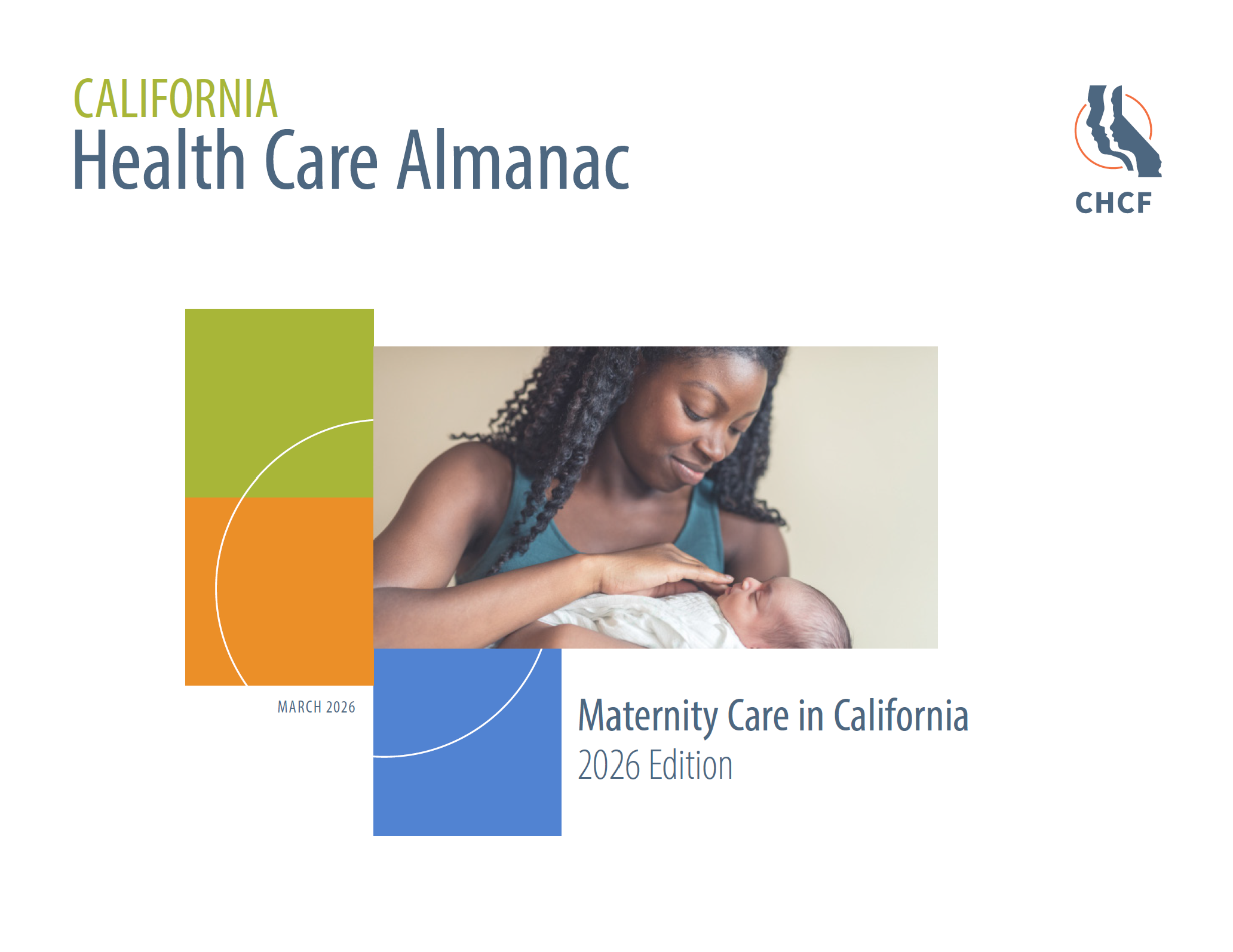
Maternity Care in California Almanac — 2026 Edition
- CHCF uses the term mothers but recognizes that not all people who become pregnant and give birth identify as women or mothers. ↩︎