|
Getting your Trinity Audio player ready…
|
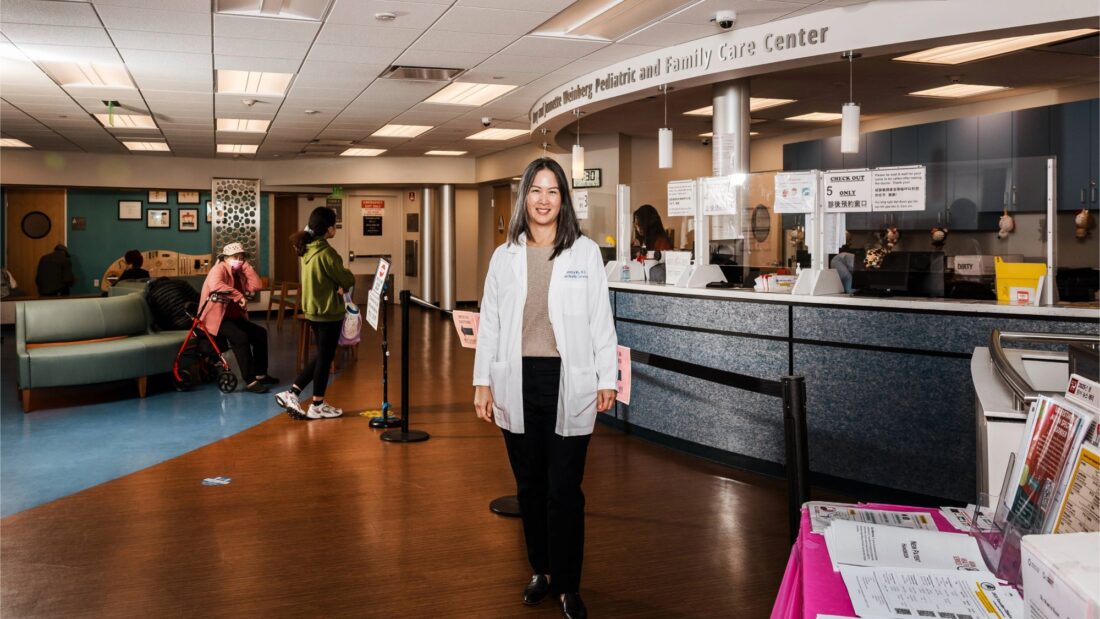
A major demographic shift is rapidly expanding California’s older adult population, creating new opportunities for community health centers that have traditionally focused on serving younger adults and families enrolled in Medi-Cal, the state’s Medicaid program.
The state Department of Aging estimates that by 2030, older Californians will outnumber those under 18 for the first time, and by 2040, one in four Californians will be 60 or older. In that group, the highest growth rates will be among Latino/x and Asian older adults, according to the Public Policy Institute of California.
CHCF Partners With Health Centers to Advance Skills, Systems, and Strategy … Sidebar below
Providing quality care for seniors will require health providers familiar with medically complex and diverse patient populations. And community health centers — with decades of experience providing comprehensive, culturally competent care to high-need patients with low incomes — are well positioned to take a leading role.
“We are designed to accommodate this higher level of complexity,” said Brandon Thornock, chief executive officer of Redding-based Shasta Community Health Center. The clinic provides care to 40,000 people in rural Northern California. “It’s a reflection of the communities we serve in the Medi-Cal space.”
Christopher Bui, MD, agreed. He’s associate chief medical officer at Los Angeles-based AltaMed Health Services Corp., which serves 500,000 people in Southern California.
Building Senior Care Services
“The senior population is a growing market for health care,” Bui said. “For health centers on the smaller side that are thinking about really focusing on senior care, it’s 100% doable.”
AltaMed has for 20 years provided comprehensive, wraparound care for older people enrolled in both Medicare and Medi-Cal through the health system’s Program of All-Inclusive Care for the Elderly (PACE). In 2022, it started offering a broader program called Viva Gold for people transitioning into Medicare. Before Viva Gold, many patients would switch to other providers when they became eligible for Medicare.
“We found that was a missed opportunity,” Bui said. “So, we set off on this mission to create a premier, senior-focused experience.”
Viva Gold features concierge-style services, longer doctor visits, and personalized care.
“It’s that concierge experience, having that call center that can take in calls quickly so that patients won’t need to wait 40 or 50 minutes on the line to speak with a live representative,” he said. “That really pays dividends for attracting and keeping patients.”
Increasing Medicare-eligible patients and programs to a health center’s payer mix also may create healthy financial diversification amid challenges to Medi-Cal due to federal policies and state budget constraints, said Kate Meyers, senior program officer with the California Health Care Foundation.
“In the long term, it’s good for patients, their families, and for the health care system if organizations prepare for the growing number of older adults and think about ways they can serve them to help them stay in their homes and communities for as long as they can,” Meyers said.
The Complicated World of Medicare
Still, delivering comprehensive health care to Medicare-eligible Californians does require a deep dive into the complicated world of Medicare programs, reimbursements, and billing.
“There is complexity there, but I would encourage health centers to think of it as manageable complexity,” Meyers said. “There are pathways and models to build out capabilities that don’t have to be all or nothing, or turned on overnight.”
Thornock agreed: “It’s just a matter of us leveraging the opportunities that Medicare has created to meet these patients where they’re at. You just need to know where to go and how to tap into it.”
Shasta Community Health Center uses a multipronged approach to provide care to about 7,000 older adults. Those services include hiring a part-time geriatrician as they prepare to launch a PACE program, and integrating with an accountable care organization (ACO) — providers that join together to provide coordinated, high-quality care to Medicare beneficiaries.
When ACOs keep costs down while maintaining quality care and patient satisfaction, providers can share in those savings. Thornock said that Shasta’s care models and processes supporting 4,700 senior patients enrolled in its ACO contributed significant revenue through shared savings.
Managing Chronic Care for Older Adults
“Another thing we’ve been doing that’s really good for the seniors is called CCM — Chronic Care Management — and that service has been frankly amazing,” Thornock said.
CCM is a Medicare Part B program designed for beneficiaries with two or more chronic conditions. Participants receive coordinated services, including personalized care plans, 24/7 access to providers, medication management, regular health checkups and education. The provider bills Medicare for each service, leading to better patient outcomes, increased patient satisfaction and higher revenue for the provider.
Thornock said his organization contracts out most of this work in exchange for about one-half of the reimbursement. The remainder, he said, is used to support the health center.
“All those dollars stay here for our services,” he said.
Thornock suggested health centers explore other related programs, such as:
- Remote Patient Monitoring, which allows providers to follow a patient’s health metrics from home. The provider remotely tracks the person’s vital signs and responds immediately if an issue arises.
- Behavioral Health Integration, a Medicare Part B program that reimburses providers for holistic, coordinated care, including assessments, medication management, and counseling for depression, anxiety, and other behavioral health conditions.
“When you’ve done all those things, you’ve created a model that not only covers your cost but that’s a sustainable program that adds financial value to your organization so that you can continue to expand and provide additional resources,” Thornock said.
Along with AltaMed and Shasta Community Health Center, here’s how five other community health centers are helping shape the future of senior care in California.
Examples of Five Community Health Centers’ Approaches
Asian Health Services
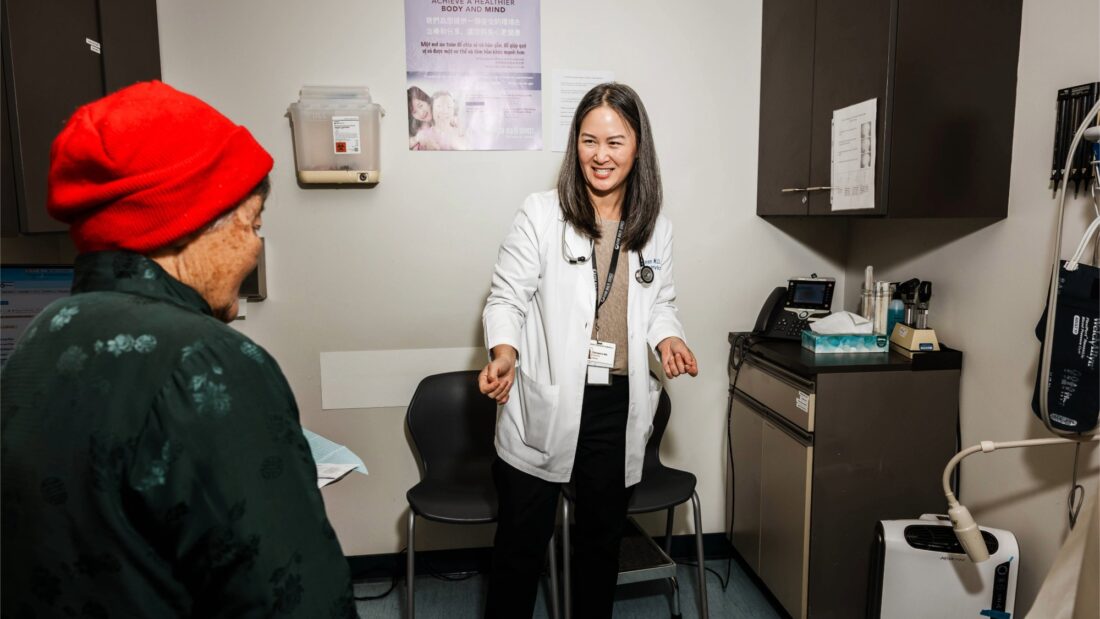
Oakland-based AHS serves a large population of seniors in more than a dozen Asian languages. Daveena Ma, MD, the center’s associate chief medical officer, said 10,000 older adults make up about 36% of its patients, many of whom have relied on the organization for decades.
“It’s a wonderful thing that we have all these patients who have aged with us,” she said. ”But there’s a point when we realize, ‘I have an entire day of patients who are over 70, and I’m seeing three of them an hour.’” Seeing so many older adults means they need to be doing things differently in the office.
Under a prospective payment rate model based on visits rather than services performed, the math may not work out.
“So, it’s challenging to invest in wraparound services in the same way or think about potentially longer visits because that means fewer visits,” she said.
That prompted Asian Health Services to join an ACO. The reimbursement model allows the center to provide “appropriate care, the care our patients need,” she said.
AHS recently hired a geriatrician who assists primary care physicians with the highest-need older patients as she builds her own patient base.
The organization also aims to build its own PACE program to help high-need seniors remain in their community.
Lifelong Medical Care
The Oakland-based health center opened in Berkeley in 1976 to serve older Californians with its “Over 60 Health Center.” Today it serves more than 50,000 people across 15 health centers — about 15% of whom are older adults — said Kathryn Stambaugh, who formerly led the development of many older adult programs with Lifelong and now manages its affiliated PACE organization.
The organization cares for people with complex health conditions as well as serving the unhoused population with five street medicine vans and two mobile dental centers.
“What has changed more recently is that Lifelong is seeing older patients across all its health center locations,” Stambaugh said.
The older population is a diverse group “where a person who is 55 and has been homeless for five years might be dealing with a lot more health issues than a much more resourced 70-year-old,” she said.
Lifelong offers house calls to its neediest homebound patients in its “Care At Home” program. And for some patients needing rehabilitative care in a skilled nursing facility (SNF) after a hospital stay, Lifelong team members can visit the patient there to maintain continuity of care.
North East Medical Services
NEMS serves patients in its home base of San Francisco as well as in Daly City, South San Francisco, San Jose, and Las Vegas.
NEMS has seen a 9% increase in its older patient population in the last decade, said CEO Rachel Koh. As of last year, 25% of its 83,000 patients were over 65, with most speaking Mandarin or Cantonese.
The organization has staff geriatricians to care for older adults, 250 of whom are enrolled in its PACE program, Koh said.
Older patients who need more attention are offered longer appointment times and annual wellness visits that include assessments of their lifestyle, cognitive function and preventive screenings, “all aiming at creating a personalized care plan tailored to each patient’s need,” she said.
To address care and housing needs in their San Francisco community, the organization is poised to open a residential care facility for the elderly (RCFE) in early 2026 for 32 residents. The RCFE will provide housing, personal care supports, meals, transportation, activities, and other services for those unable to live independently.
North East Valley Health Corp.
About 10% of the Los Angeles-based center’s 85,000 patients are at least 60 years old.
The health center’s chief medical officer, Christine Park, MD, said the organization’s goal is to retain patients as they age into Medicare for continuity and quality: “We are their community health center that provides culturally and linguistically appropriate care to them.”
To help make that happen, the organization has given one staff member the title of “Medicare Champion” and appointed her the go-to person for all things Medicare.
“We can have patients talk with her (about Medicare) and she can also provide training…to coworkers who have questions about Medicare,” said Park. That employee teams up with a Medicare enrollment broker at clinic health fairs. Retaining patients as they age into Medicare ensures continuity of care and gives the health center the opportunity to partner with additional payers beyond Medi-Cal, including Medicare Advantage plans.
On the operational side, to provide older adults with more time during appointments, Park said, the organization has identified three of its doctors with the highest number of senior patients.
“And we have decreased the number of patients on their schedules to give them more time to spend with this older adult population,” she said.
San Ysidro Health
The San Diego-based system serves more than 130,000 patients in San Diego County, 35,000 of whom are over 65.
“With the baby boomer generation…we pretty much committed to working with seniors… close to 15 years ago,” said Chief Operating Officer Kevin Mattson.
In addition to multiple PACE locations, San Ysidro Health also operates two senior health clinics that provide longer appointment times and senior-focused care for those over 50.
Mattson said while smaller health centers may need to begin providing specialized senior care in other ways, it’s nevertheless worthwhile for them – and their patients – to keep older adults within their organizations.
“You’ve been their provider for … many years,” he said. ”Just because they turn 65 doesn’t mean you can’t see them. …we can do more for these patients than the private community can. That’s why health centers exist.”
CHCF Partners With Health Centers to Advance Skills, Systems, and Strategy
CHCF has been partnering with California community health centers (CHCs) to support learning, planning, practice improvements, and long-term strategies for them to thrive while helping older adult patients to live well.
From late 2023 to early 2025, seven CHCs participated in the foundation’s learning community initiative, Accelerating Readiness for an Aging Population Learning Community. The health centers took stock of their strengths and challenges, launched small projects to test new ways of working, and learned from experts and peers about clinical, financial, and day-to-day realities of caring for an older population.
In 2024, leaders from six innovative health centers or CHC-led independent practice associations convened as part of CHCF’s Strategies for Older Adult Services Task Force. This work produced a 10-year roadmap to help health centers build on the comprehensive care they already do well, offer more services for people later in life, shift toward value-based payment models, and test new ways of getting reimbursed. (Read the Roadmap.)
In 2025, CHCF supported the California Primary Care Association’s development of a six-part webinar series. The presentations are intended to help California health centers learn how Medicare works, what it covers, what special programs and coverage models exist, and how health centers can be reimbursed appropriately if a person has Medicare only or both Medicare and Medi-Cal. (View the primary care association’s Medicare webinar series, which includes recordings, slides, and tip sheets. Free registration is required.)
To help health centers understand the basics of Medicare billing and how it varies based on different patient coverage scenarios, CHCF has published “Considerations for Medicare Billing in Federally Qualified Health Centers.”
Authors & Contributors
Stephanie O’Neill
Independent journalist
Stephanie O’Neill is an independent reporter/producer and editor who specializes in health policy and science.
Carolyn Fong
Commercial and editorial photographer
Carolyn Fong is a commercial, editorial, brand, and portrait photographer working throughout the San Francisco Bay Area.