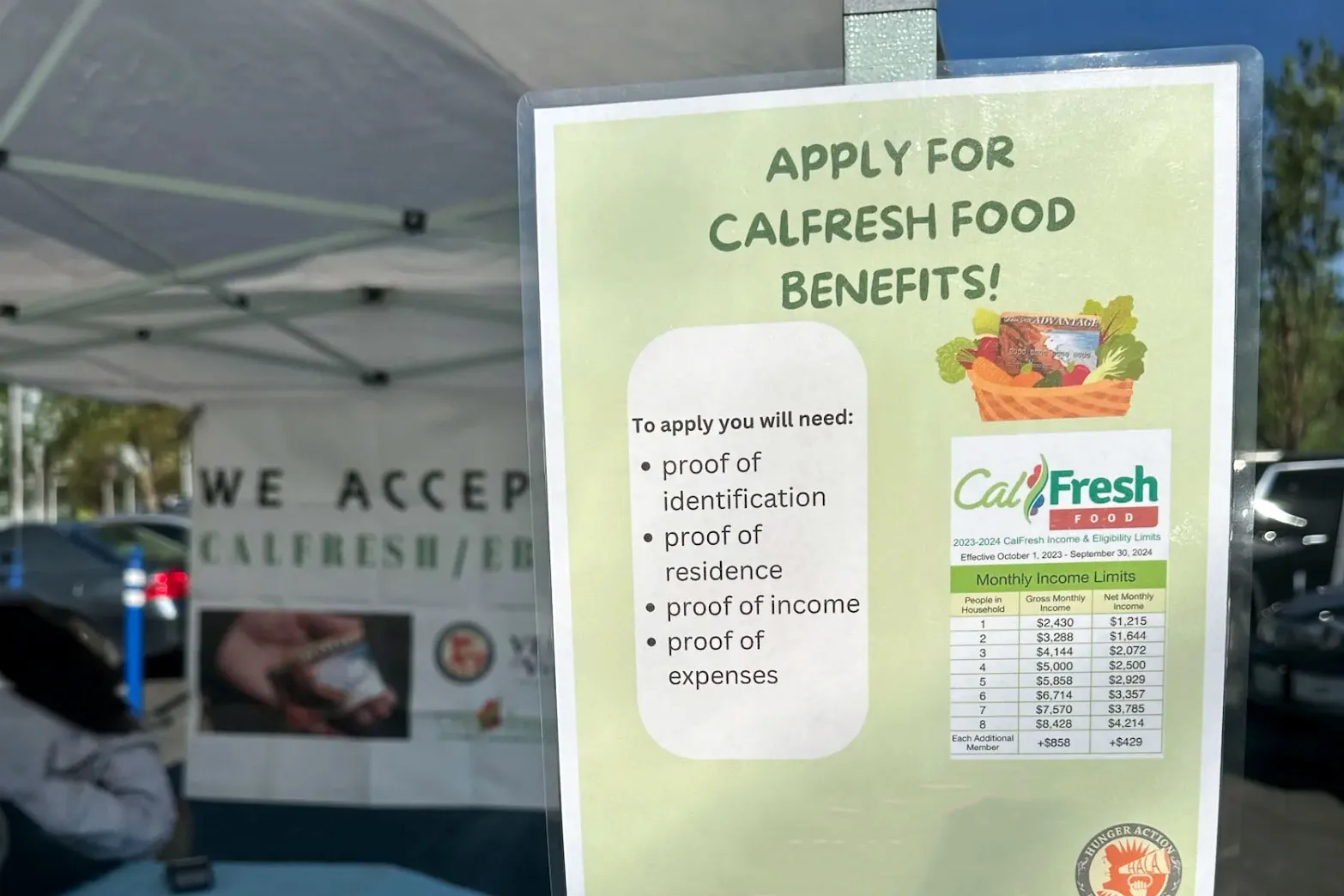

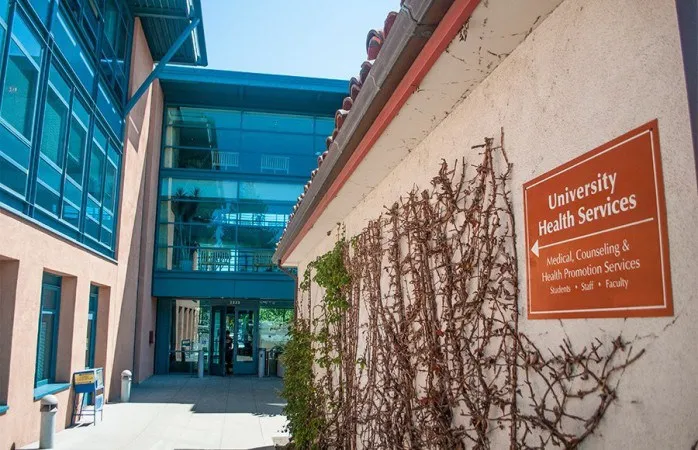
access their campus student health center for free or at reduced cost. Credit: UC Berkeley
Editor’s note: The names of students in this article have been changed to protect their privacy. Their stories come from participation in focus groups, survey responses, and direct testimonials.
Academic pressures and newfound independence shape college students’ medical and mental health needs. That’s why the University of California (UC) system requires every student to have health insurance. The university automatically enrolls everyone in the Student Health Insurance Plan (SHIP) so no one is left uncovered.
But for the estimated 88,000 undergraduate students on nine campuses who are eligible for Medi-Cal, California’s Medicaid program, this requirement can make care less accessible and more expensive.
In addition to tuition hikes and rising living costs, students from families with low incomes are paying for coverage they already get free through Medi-Cal. Students are charged high premiums and copays and are sometimes required to pay fees for services or prescriptions that Medi-Cal covers at no cost. Students can opt out of SHIP, but only if they prove they have coverage near campus. For many students, that means moving their Medi-Cal coverage from their previous community to a new county.
Compounding the challenge, UC campus websites lack information to guide students with Medi-Cal through their options.
All of this adds up to a broken process that harms some students’ health.
In recent months, with CHCF support, we have been researching the access and affordability issues surrounding UC students on Medi-Cal. Our goal is to better understand and develop policy options that will fix these problems. We have shared our findings with the office of the UC president and the California Department of Health Care Services (DHCS).
Students who have been negatively affected by this process say the disruptions are significant. David, a UC Berkeley student originally from Orange County, had received care for his disability through Medi-Cal for years. When the university enrolled him in SHIP automatically, he lost access to critical services, including weekly therapy and coverage for medication he needs “to stay healthy.”
“I couldn’t receive any of the essential care that I had gotten before because my insurance wouldn’t cover it,” he said. “SHIP also wouldn’t cover the level of care that I needed to manage the symptoms of my disability.” A year went by before he was able to waive SHIP, re-enroll in Medi-Cal, and resume his care regimen.
What UC SHIP Costs Students with Medi-Cal
For students needing comprehensive coverage, SHIP offers medical, dental, and vision care. Students must have SHIP to access their campus student health center for free or at reduced cost. Since these health centers accept no other types of insurance and do not offer out-of-network rates, those with other health plans, including Medi-Cal, typically pay full price.
But many students with low incomes view SHIP premiums as unaffordable. Depending on the UC campus, annual premiums range from about $2,800 to $5,000. Most Medi-Cal enrollees pay no premium.
SHIP coverage also includes significant deductibles and other out-of-pocket costs for services that Medi-Cal would cover for free. Maria at UC Davis requires regular infusions of an expensive drug to manage an autoimmune disorder. Medi-Cal has long covered her treatments; SHIP does not.
Each campus offers grants to help students with low incomes pay SHIP premiums, but the grants often fall short. Four of UC’s nine campuses cover no more than 75% of the premium. Grant amounts vary by student need. When a grant doesn’t cover the full premium, the difference is added to the student’s loan balance.
Most of that grant money pays for duplicate coverage. We estimate that about 90% of the $185 million paid out in SHIP grants in 2026-27 goes to students who are likely already enrolled in Medi-Cal. UC does not track Medi-Cal eligibility. (As a proxy, we used Pell Grant eligibility. Pell Grants go to undergraduates with significant financial need, but not all recipients are enrolled in Medi-Cal.)
SHIP Waiver Process Fails Students
Students who have an alternate source of coverage, including Medi-Cal, can waive SHIP. The process is burdensome enough that some eligible students don’t apply.To obtain a waiver, students must complete the application process before the academic year begins and must re-apply each succeeding year they study at UC. Their non-SHIP coverage must have providers nearby, typically within 50 miles of their campus. That means students whose Medi-Cal is based in a distant home county must move their benefits to the county where they attend school.
But moving one’s coverage initiates a confusing process that can be too slow to meet the strict waiver deadline. The address update process can take nearly two months. Gaps in communication between counties and campuses lead to errors and delays. These challenges are intensified during academic breaks, when students may need to move their coverage again from their campus county back to their home county, often on a tight timeline. When the break ends, the process must be repeated.
When Alex, a UC Berkeley student from Orange County, needed to see a specialist during an academic break, they were cleared to see that provider only during a three-week window. The provider had no openings in that window, so Alex went without care.
A student who misses the waiver deadline is responsible for SHIP premiums and any out-of-pocket care costs. Because SHIP becomes their primary insurance, students enrolled in Medi-Cal and SHIP simultaneously may get a surprise bill for visiting a doctor or obtaining a prescription outside SHIP’s network. After graduation, SHIP may stay on a student’s Medi-Cal record as other health coverage. That can lead to denied claims or care. In fall 2025, UC approved about 17,800 SHIP waivers for undergraduates with Medi-Cal. That’s about 1 in 5 of the estimated 88,000 undergraduate Medi-Cal enrollees systemwide.
How to Help Students Keep Medi-Cal, Waive SHIP
Our research engaged current UC students, employees, regents, the UC president’s staff, county eligibility workers, and DHCS. We consolidated our findings into two core recommendations for improving health coverage for students with Medi-Cal, and the UC president’s staff and DHCS are reviewing them.
Recommendation 1: Accept interim Medi-Cal coverage for SHIP waivers. The most urgent fix is to keep the slow process of moving Medi-Cal benefits from costing students their waivers. When a student initiates an address change, they are disenrolled from their original Medi-Cal managed care plan and moved to fee-for-service Medi-Cal, which Medi-Cal providers statewide accept, until they enroll in a new plan. Campuses don’t count this interim coverage toward SHIP waiver requirements. If campuses accepted a student’s Medi-Cal card along with proof that the address change is underway, such as a confirmation letter from the county, students could submit their waiver requests right away instead of waiting for the address update process to finish.
Recommendation 2: Give students clear guidance. UC administrators and county Medi-Cal eligibility offices should coordinate on student-facing information. UC websites and emails should give students with Medi-Cal step-by-step instructions on how to update their address.
What’s at Stake for UC Students with Medi-Cal
For Amy, an undergraduate at UC Berkeley and the first in her family to attend college, Medi-Cal worked the way it should. Her home plan covered care in her campus county, so she waived SHIP and put the premium money toward other essentials.
But for many other students with Medi-Cal, SHIP imposes a heavy financial and logistical burden, affecting their ability to access and afford needed care.
Amy said a close friend at school struggled to move her Medi-Cal coverage to Alameda County. When the friend became pregnant, she spent hours trying to understand her coverage, find providers who would accept the insurance, and figure out where she could get affordable prenatal care. “I watched her stay up late into the night, stressed and exhausted, trying to get answers from systems that felt unclear and unresponsive,” Amy said. “No one should have to question whether they can receive basic prenatal services simply because they moved counties to pursue their education.”