
|
Getting your Trinity Audio player ready…
|
When I was 11 years old, my mother rushed me to the hospital with a severe stomachache. The usual home remedy of yerba buena tea had done little to alleviate my pain. Hours later, Dr. William Pillor removed my appendix and told my mother she had brought me in just in time.
Fortunately, my family had health insurance. Without it, I do not know how my parents would have paid for the surgery.
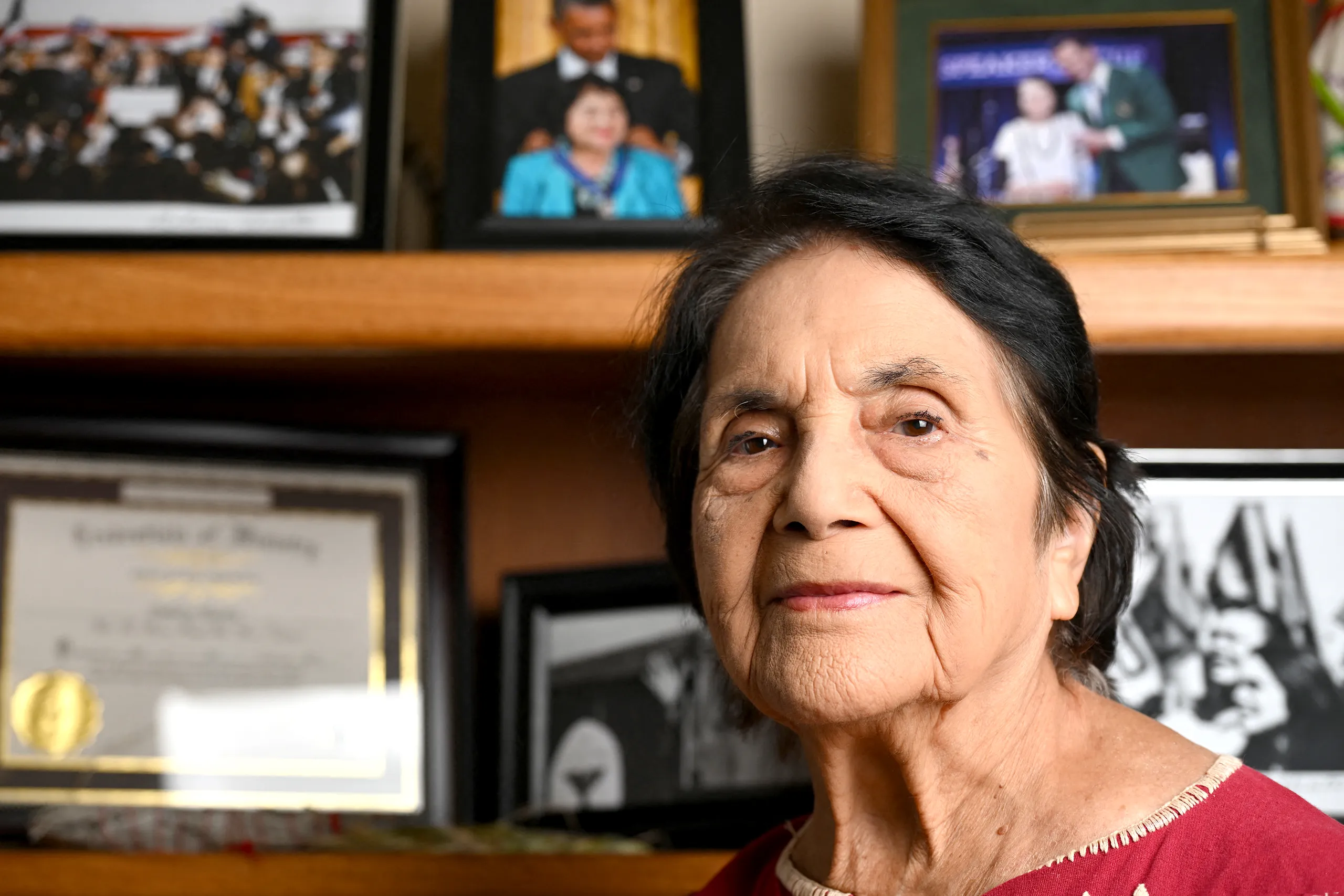
Dolores Huerta’s death on Oct. 28 at age 96 ended a remarkable career as one of the nation’s most important labor leaders and civil rights activists. For decades, Huerta fought to improve the health and well-being of farmworkers and their families, advocating tirelessly for access to health care and workplace protections that so many lacked.
My mother, Maria, often reminded us how fortunate we were. She worked seven months a year at a Central Valley fruit packing plant that offered health insurance, which we had lived without for years before that. She worked at the plant through 31 scorching summers and during the harvest season put in 16-hour days.
But she considered herself lucky. Before that, my parents worked in vineyards and orange groves near Fresno. They had no health insurance, no easy access to drinking water, and no bathrooms in the fields.
A Fight Rooted in the Central Valley
The Central Valley was the setting for many of Huerta’s hard-won battles. As co-founder of the National Farm Workers Association, which became the United Farm Workers union, she organized workers to demand better wages, safer working conditions, clean drinking water, sanitation facilities, and health benefits.
The UFW initiated the Robert F. Kennedy Farm Workers Medical Plan in 1968 and put it into operation the next year to provide health benefits to eligible farmworkers and their families. It was a key step toward improving access to health care for workers who had long gone without it.
Huerta understood that protecting workers’ health required more than ensuring access to medical care. It also meant addressing workplace hazards, including exposure to dangerous agricultural pesticides.
Growers used these chemicals widely in the Central Valley, putting farmworkers and nearby communities at risk. One was the pesticide DBCP, used to protect grapes and citrus from soil-dwelling pests. Linked to serious reproductive health risks, DBCP contaminated groundwater in agricultural communities, including my hometown of Sanger. California banned its use in 1977.
In 1993, the city of Sanger reached a multimillion-dollar settlement with chemical manufacturers that helped pay to clean up contaminated wells. I remember my parents reading annual reports from the city detailing contaminants in our drinking water.
Although the pesticide contaminated wells in Sanger, I can’t say for sure whether my parents were exposed to DBCP or other pesticides in the fields. But I know they worked in an industry where hazardous conditions were accepted as part of the job.
Huerta challenged that acceptance, and the farmworker movement made worker safety, environmental protections, and access to health care its central demands.
A Struggle That Continues
Decades later, the COVID-19 pandemic laid bare many of the same workplace hazards and health inequities Huerta spent her life fighting to address.
The Central Valley was hit especially hard. Farmworkers and food-processing employees continued reporting to work, helping maintain the nation’s food supply while facing significant risks to their own health.
The consequences were devastating. At Foster Farms poultry-processing facilities in the Central Valley, hundreds of workers became infected, and 16 people died in one of the country’s deadliest COVID-19 outbreaks at a meat or poultry plant.
These were essential workers, many immigrants and Latinos. They faced inadequate workplace protections, limited access to health care, and economic pressures that made it difficult to stay home when they were sick.
During the pandemic, Huerta urged communities to get vaccinated and take other steps to protect themselves and their families. She encouraged Latinos and families with low incomes to enroll in health coverage through Covered California.
Her advocacy reflected an understanding that health is shaped by much more than what happens in a doctor’s office. Working conditions, environmental exposures, income, and access to health care all affect whether people can live healthy lives.
Huerta helped improve the lives of generations of families. But the pandemic reminded us how much remains to be done before all workers have safe workplaces and access to affordable health care.
When I think about her legacy, I think about my mother and my father. I think about the sacrifices they made and the opportunities their hard work gave our family. And I think about being 11 years old, lying in a hospital bed after emergency surgery.
My family was fortunate to have health insurance. But access to medical care should not be a matter of good fortune.
What Comes Next for Medi-Cal
Today, federal cuts to Medicaid threaten coverage for millions of Americans, including many Californians who rely on the state’s Medicaid program, known as Medi-Cal. The progress Huerta fought for is at risk from H.R. 1, the 2025 federal budget reconciliation law and its Medicaid provisions, including work requirements and more frequent eligibility checks for enrollees.
The recent health policy changes disproportionately affect the people she advocated for, making it harder for workers and people with low incomes to get and keep health coverage. State leaders should protect Medi-Cal enrollment for eligible Californians as new federal rules take effect.
The midterm election put a new set of state and federal leaders in charge of health policy. Their decisions will reach all the families who rely on Medi-Cal at the clinic, the hospital, and the pharmacy counter.
The challenges ahead are significant, but Huerta’s life reminds us that progress is possible, even in the face of huge obstacles. She understood that access to health care is fundamental to human dignity and that lasting change happens when people come together to demand it.
She gave that belief an iconic rallying cry: ¡Sí, se puede!