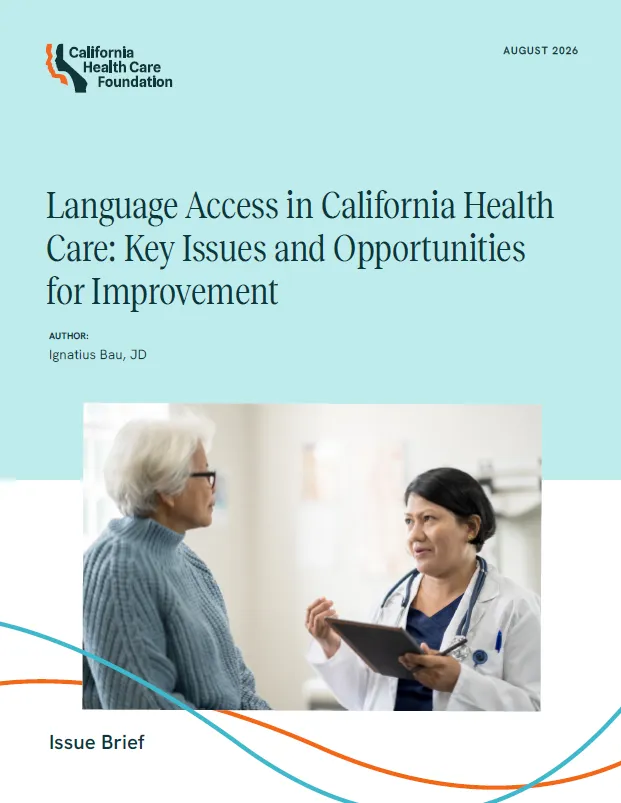
Although California has strong requirements for language access in health care, millions of Californians with limited English proficiency continue to face barriers to safe, high-quality care. This issue brief examines where California stands today, why language access matters, and the policy opportunities that could strengthen implementation across the health care system.
Key Takeaways
- Significant Need: Nearly one in five Californians has limited English proficiency.
- Quality and Safety: Language access improves care quality, patient safety, and health outcomes.
- Implementation Gaps: California’s legal framework is strong, but execution remains inconsistent.
- Policy Solutions: Targeted policy changes and clear guidance on emerging AI tools can strengthen the system.
The Impact of Language Barriers
Nearly 6.5 million Californians age five and older have a primary language other than English and limited English proficiency. Research shows that language-concordant care leads to greater understanding of diagnoses and treatment, resulting in better medication adherence. Conversely, a lack of access to linguistically concordant care increases the risk of adverse patient safety events.
Gaps in the System
Patients in California today still experience barriers due to unmet language needs. For example, in a recent study, Spanish-speaking callers contacted providers for mental health appointments. Schedulers hung up or said no Spanish speakers were available in nearly one in five calls. Additionally, California lacks a verified multilingual workforce that matches patient needs. Emerging technologies like AI translation offer potential solutions, but they require clear regulatory safeguards to protect patient safety.
The Path Forward
Decisionmakers have several opportunities to strengthen language access infrastructure: the state can secure funding for language services, and state agencies can increase monitoring of existing requirements. Supporting professional development for interpreters and multilingual staff, as well as promoting good practices and toolkits for language access, will build a workforce better equipped to meet these needs. On a broader scale, integrating language access into greater health equity strategies will help ensure all Californians get the care they need.
The full issue brief is available for download below.